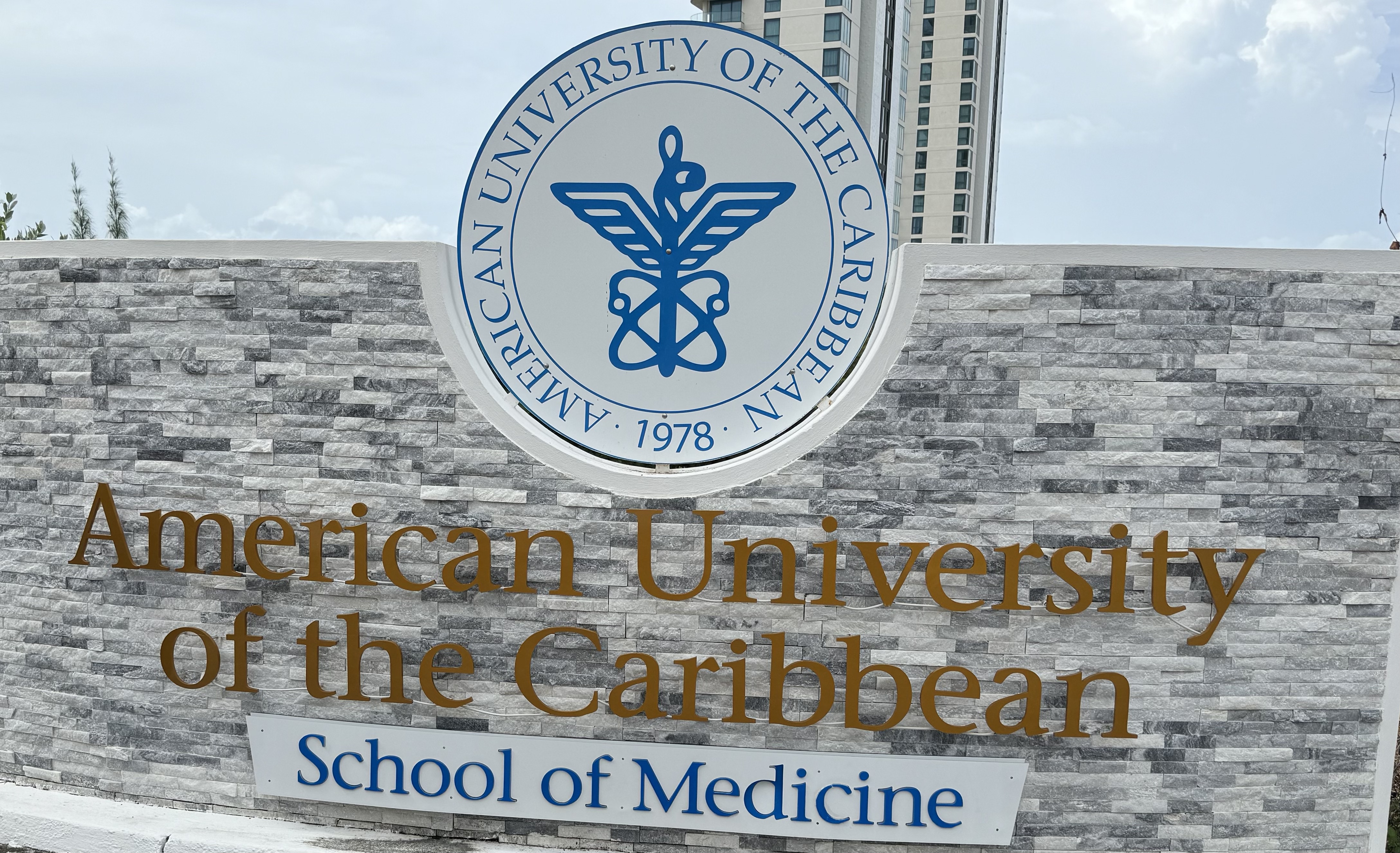
Deciding where to attend medical school can be quite difficult, especially when deciding to move to another country. In this post, I will discuss how I chose to attend the American University of the Caribbean (AUC). I will also cover how my decision has been confirmed through my experiences so far.
When I was deciding where to attend medical school I narrowed my search down to a handful of schools in the Caribbean but choosing the right one was difficult.
I toured two schools in person prior to making my decision. In fact, I went on my tour of AUC having after “deciding” that I was going to attend the other school. AUC won me over with the quality of its education, opportunities it offered, and the friendly nature of the island, students and staff.
Key aspects I considered when picking a school were: residency match rates, clinical rotation opportunities/locations, tuition costs, and the on-island experience for the didactic years.
I will cover each of these topics in the order in which I used them in my decision making.
1) AUC’s Reputation
AUC is considered to be one of the “Big Three” schools of the Caribbean, meaning that there is a large enough alumni base and foot print that the quality of its graduates is recognized by residency programs and hospitals. They also have reliable partnerships for clinical rotations for students in their M3 and M4 years.
AUC’s website boasts strong pass rates for the USMLE Step 1 and a high matching rate for residency. These metrics show that AUC provides students with the skills and knowledge necessary to succeed in the next phase of their career.
2) Clinical Rotations in the United States
Most of the AUC clinical rotations are located on either the East Coast of the United States or in the Midwest. Having so many opportunities within a 2-3hr flight or drive away from home assured me that I would have plenty of good options for clinical rotations.
While locations for core rotations are more limited, there is an extensive list of partnerships for elective rotations. You can also choose to do away electives at non-partner hospitals (if the right paperwork and approval is processed).
3) Scholarships and Tuition
The cost of attendance at medical school is quite high regardless of where you attend, especially when attending a private school in the Caribbean. However, AUC has one of the lowest total costs of attendance for this category. Additionally, many students receive scholarships based on their MCAT or GPA. These are awarded at the time of admission. I was eligible for the top level of scholarship offered (which covered ~10 % of the cost of total attendance).
There are newer scholarships that have the potential to be “boosted” for those who meet course progression and performance metrics.
4) Friendly Island and Friendly People
Sint Maarten has a reputation of being “The Friendly Island” and I found this to be quite true when I toured.
Ms. Agnes provided the tour for my family and went out of her way to answer my many, many questions. She even brought the lead proctor of the testing center and one of the professors to help answer my questions. Meeting with one of the professors is part of what changed my mind from the other school to AUC.
5) Safety
The island itself is also quite safe. Normal safety precautions you would use when home are sufficient for staying safe during your time at school.
The school also offers a shuttle to help students travel between nearby areas in the evening hours (primarily to Maho and Porto Cupecoy). During my time on the island, this was done in an “on demand” fashion where students message security via WhatsApp to get picked up.
6) Resources on AUC’s Campus
On that same tour, I was able to tour the labs at AUC. The larger “Building Two” houses our anatomy lab, Harvey Lab, Ultrasound lab, and SimMan lab.
The anatomy lab has two separate sections: 1) Dry lab, where students can study, use large interactive touchscreens, and utilize the anatomy models. 2) Wet Lab, where students dissect cadavers starting in their second semester. Several student organizations also host hands on surgery workshops in this lab.
The Harvey Lab is a heart-sound stimulation lab where each student uses a headset connected to a stethoscope to listen to heart sounds at their correct listening point.
Ultrasound lab has a combination of real ultrasound machines and simulations to allow students to practice both on consistent models and on live standardized patients.
SimMan is a sophisticated manikin that is used for clinical round simulations. In these simulations, students take vitals, ask for the patient’s history (provided by a standardized patient through a speaker in the manikin), set up monitors, and order lab work and tests. These simulations were often followed up with a debriefing period with the supervising clinical professor.
Bonus: Student Opportunities at AUC St. Maarten
AUC’s St. Maarten campus has plenty of opportunities for students to participate outside of the classroom. This includes everything from student organizations, volunteering opportunities, intramural sports, to cultural organizations and research projects. For such a small community, AUC does a great job of providing their students with a well rounded learning environment.
If you’ve made it this far, thank you!! Please let me know what other content you’d like to see in the future by using the contact form.
Leave a Reply